Recalled Jalapeños from Mexico Have Sickened 345 People; Two Cases Show Antibiotic Resistance
Sinaloa Grower and Coast Citrus Distributor Named; Chipotle and QDOBA Had Already Pulled Supply
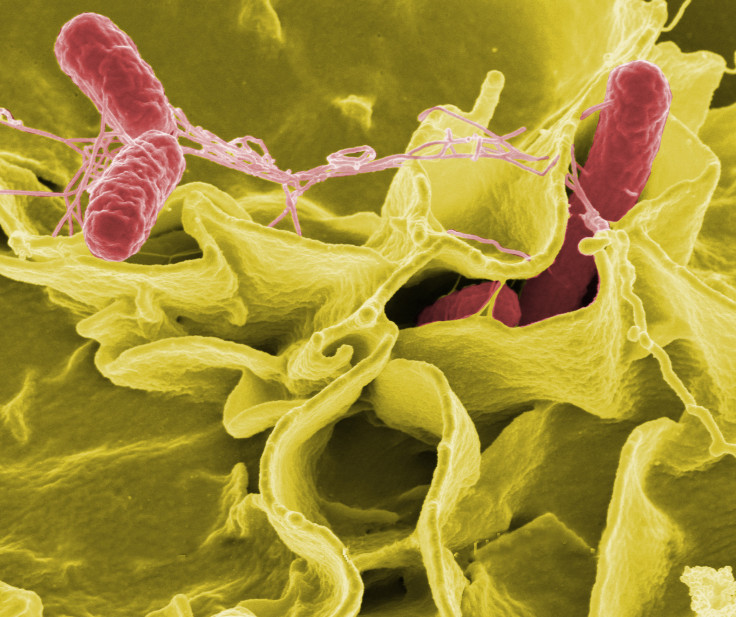
The CDC and FDA confirmed on August 5, 2026, that 345 people across 27 states have been sickened in a multistate Salmonella Javiana outbreak traced to fresh jalapeño peppers grown in Sinaloa, Mexico and distributed in the United States by California-based Coast Citrus Distributors — and genetic analysis of patient samples has found that while most of the bacteria involved respond normally to standard antibiotics, two cases carry resistance profiles that could severely limit treatment options if those patients developed serious infections.
The outbreak has sent 36 people to the hospital — roughly 12 percent of the 291 confirmed cases for which hospitalization data are available — and affected people ranging in age from under one year old to 85, with a median age of 30 per CDC's investigation. No deaths have been reported. Illness onset dates run from June 19, 2026 through July 20, 2026, though the CDC has cautioned that the true case count is almost certainly larger — many people recover without seeking medical care and are never tested, and the standard reporting lag for outbreak cases runs three to four weeks.
The most important practical finding for consumers is supply-chain specific: at this time, Coast Citrus Distributors does not appear to have supplied fresh jalapeños directly to grocery stores, according to the FDA's outbreak advisory. The company primarily distributed to restaurants, wholesalers, and food service companies. Consumers who are not recent restaurant visitors have limited exposure risk from this specific recall.
Both Chains Had Moved Away from the Contaminated Supply Before the Announcement
Chipotle Mexican Grill and QDOBA are the two chains most prominently linked to the outbreak — 27 illness clusters have been confirmed at their locations across 7 states, and 93 percent of the 191 people investigators were able to interview (177 out of 191) reported eating at a Mexican-style restaurant before becoming ill, including Chipotle or QDOBA, with meal dates spanning June 14 through July 14, 2026 per the CDC investigation update. Commonly reported ingredients included jalapeño peppers, red onion, cilantro, and avocado.
But both companies had already eliminated the contaminated product from their supply chains before the August 5 public announcement. Chipotle switched its jalapeño supplier for all stores nationwide beginning July 20, 2026 per the FDA advisory. QDOBA ceased using jalapeños at its restaurants on July 28, 2026, and its locations are no longer serving them per the FDA advisory. The CDC and FDA have stated that, given these actions, they do not consider either chain to represent a current ongoing risk to consumers in this outbreak.
The distinction matters for how consumers read the 27 clusters. Those clusters represent real illness events involving people who ate at Chipotle and QDOBA locations during the June–July window, when the contaminated supply was in use. They do not reflect a current contamination risk at those restaurants.
Where the Jalapeños Came From: FDA Names the Source Chain
FDA conducted a traceback investigation based on where sick people reported eating and identified a common jalapeño grower in Sinaloa, Mexico — one of the country's primary agricultural regions — as the likely source per the FDA outbreak investigation. That grower's product reached US restaurants and food service companies through Coast Citrus Distributors, a California-based importer and distributor.
Following the traceback finding, the FDA recommended that Coast Citrus Distributors conduct a recall to remove remaining implicated product from the market. The company cooperated and agreed to issue the recall; it is actively identifying and contacting affected customers per the FDA advisory. The FDA is continuing to investigate the full scope of the distribution — including whether any product reached retail grocery stores — and has said it will update its advisory as new information becomes available.
Businesses and food service operators who received fresh jalapeños from Sinaloa, Mexico, imported by Coast Citrus Distributors, should not sell or serve them. The FDA advises discarding the product and thoroughly cleaning and sanitizing any surfaces or containers it may have touched.
The geographic origin is consistent with prior produce-linked Salmonella outbreaks in the United States. In 2008, Salmonella Saintpaul — a related serovar — sickened more than 1,400 people across 43 states and was ultimately traced to jalapeño and serrano peppers from Mexico, in an outbreak that initially and incorrectly focused regulatory attention on tomatoes per the NEJM investigation report. Sinaloa's agricultural production represents a significant portion of the fresh peppers imported into the United States each year.
What the Lab Data Shows — and the Two Cases That Are Different
The CDC's PulseNet surveillance system, which uses whole genome sequencing (WGS) to compare the DNA of bacterial samples from sick people, confirmed that bacteria from patient samples are closely related genetically — the clearest available evidence that a single contaminated food source is responsible for all 345 confirmed cases per the CDC's PulseNet WGS program. WGS has largely replaced older typing methods and can now also scan bacterial genomes for genetic markers that predict resistance to specific antibiotics, delivering this information faster than traditional culture-based susceptibility testing.
The picture WGS returned is largely reassuring: bacteria from 343 of the 345 patients with samples analyzed showed no predicted antimicrobial resistance per the CDC investigation. For those patients, standard antibiotic treatment — if clinically needed — would be expected to work.
Two cases are different.
One patient's bacterial sample carried predicted resistance to six antibiotics — ampicillin, ceftiofur, ceftriaxone, streptomycin, sulfisoxazole, and trimethoprim-sulfamethoxazole — and predicted nonsusceptibility to ciprofloxacin per the CDC investigation. A second patient's sample showed predicted resistance to azithromycin per the CDC investigation.
The clinical significance of the first case is substantial. Ceftriaxone and ciprofloxacin are the two drugs physicians typically reach for when a Salmonella infection becomes severe or invasive — ceftriaxone for children with invasive disease and for adults when the infection has spread beyond the gastrointestinal tract, and ciprofloxacin for adult non-severe cases and as an oral agent when intravenous treatment is not feasible per CDC NARMS resistance data. When those two agents fail, azithromycin is the standard backup. A strain with resistance across all three treatment layers — which the combination of the first and second outlier cases in this outbreak represents — significantly narrows the pharmaceutical options available to clinicians treating a critically ill patient.
The CDC has stated that if antibiotics are needed for someone whose illness shows this predicted resistance, the bacteria may not be treatable with commonly recommended antibiotics and a different antibiotic choice may be required. More information is available from the National Antimicrobial Resistance Monitoring System (NARMS).
Two cases out of 345 is not a large proportion. Most people infected with Salmonella recover without any antibiotic treatment at all within four to seven days. The resistance finding is most relevant for patients who develop severe or invasive illness and need drug intervention — a subset that, in this outbreak, includes at least some of the 36 people who required hospitalization.
What States Are Affected
According to the FDA's August 5 advisory, cases have been confirmed in the following 27 states: Alabama, Arkansas, California, Colorado, Georgia, Illinois, Indiana, Kansas, Kentucky, Louisiana, Michigan, Minnesota, Missouri, Montana, Nebraska, North Carolina, North Dakota, Ohio, Oklahoma, South Carolina, Tennessee, Texas, Utah, Virginia, Washington, Wisconsin, and Wyoming per the FDA advisory. The map skews toward the Midwest and South, consistent with the distribution patterns of a food service distributor operating across those regions.
Minnesota has had a notable concentration of cases — state health investigators there were among the first to identify the Salmonella Javiana cluster and link it to jalapeños at Mexican-style restaurants as reported in prior TechTimes coverage.
What Consumers Need to Know Right Now
For most healthy adults, Salmonella infection causes diarrhea, fever, and stomach cramps that typically resolve within four to seven days without treatment. The risk of severe illness is substantially elevated for children under age five, adults over 65, pregnant women, and people with weakened immune systems — all of whom are more likely to develop invasive disease and require hospitalization per CDC Salmonella guidance.
Anyone who ate at a Chipotle Mexican Grill, a QDOBA, or any other Mexican-style restaurant between mid-June and mid-July 2026 and subsequently developed gastrointestinal symptoms — particularly diarrhea, fever, and abdominal cramps — should contact their healthcare provider. Mention specifically that jalapeños were likely consumed and that there is an active CDC/FDA Salmonella Javiana investigation. If a provider orders antibiotics for severe illness, the treating clinician should be aware of the two outlier drug-resistant cases in this outbreak and may wish to confirm susceptibility before defaulting to standard agents.
Consumers who have fresh jalapeños at home should determine where those peppers were purchased. Because Coast Citrus Distributors supplied primarily to restaurants and food service companies — not directly to grocery stores — the FDA's current guidance does not identify a retail recall. The FDA is still investigating whether the distribution extended to grocery channels; if it did, a separate retail recall announcement would be expected per the FDA advisory. Anyone who cannot determine the origin of jalapeños they have at home should contact their retailer or, out of caution, discard the product and wash any surfaces the peppers may have touched.
The CDC and FDA investigation remains active and open. Additional cases from illnesses that occurred in late July may still be working their way through the three-to-four-week reporting pipeline.
Frequently Asked Questions
Does this jalapeño recall affect grocery store shoppers?
Not conclusively, based on what the FDA has stated so far. Coast Citrus Distributors appears to have supplied jalapeños primarily to restaurants, wholesalers, and food service companies rather than directly to grocery stores. The FDA is still investigating whether any of the recalled product reached retail channels; if it did, a separate grocery store recall advisory would be expected. Consumers who purchased fresh jalapeños at a grocery store and want to be certain should check with their retailer about the supply source, or discard the product and wash any surfaces it contacted.
Can Salmonella from jalapeños become antibiotic-resistant, and why does it matter?
In most Salmonella cases — including the vast majority of the 345 in this outbreak — antibiotic treatment is not needed because the illness resolves on its own. But when a case becomes severe or invasive (spreading from the gut into the bloodstream), physicians rely on a small set of drugs: ceftriaxone for children and intravenous treatment in adults, ciprofloxacin for adult oral treatment, and azithromycin as a backup when the first two are unavailable or ineffective. One case in this outbreak carried predicted resistance to six of those agents plus nonsusceptibility to ciprofloxacin, and a second showed azithromycin resistance. Together, these two profiles represent the near-exhaustion of standard Salmonella treatment options. That does not change the management of typical mild illness, but it is relevant for the patients who become severely ill and need drug intervention per CDC NARMS data.
What is PulseNet, and how did it confirm this outbreak?
PulseNet is a CDC-managed national laboratory network that collects bacterial samples from foodborne illness patients across the country and performs whole genome sequencing on each one. WGS reads the complete genetic code of the bacteria. When samples from sick people in multiple states show nearly identical genetic sequences — as they did in this outbreak — that is strong evidence of a single contaminated source. PulseNet's WGS analysis was also what detected the two drug-resistant cases: the sequencing found genetic markers in those samples that predict resistance to specific antibiotics. This technology has replaced older fingerprinting methods and can now return both source-matching data and resistance profiles faster than traditional lab culture per the CDC PulseNet WGS program.
What symptoms indicate possible Salmonella Javiana infection, and when should someone seek care?
Symptoms typically appear six hours to six days after exposure and include diarrhea (sometimes bloody), stomach cramps, fever, nausea, and vomiting. Most cases resolve within four to seven days without any medical treatment. Seek medical care promptly if symptoms are severe, if diarrhea lasts more than three days, if there is blood in the stool, if you are immunocompromised, if you are caring for an infant or young child with these symptoms, or if you or a family member ate at a Mexican-style restaurant between mid-June and mid-July 2026 and developed illness per CDC Salmonella symptom guidance.
Originally published on Tech Times
ⓒ {{Year}} TECHTIMES.com All rights reserved. Do not reproduce without permission.
- MAS LEIDO