US Halts Michoacán Operations, Freezing Mexico’s $3.65B Avocado Trade
The US embassy suspended all government activity in Mexico's largest avocado-producing state over an unspecified threat. Five days on, Sheinbaum has confirmed inspectors were threatened — and Mexico is sending troops to get an export programme restarted.
MEXICO CITY — When the United States suspended all government operations in the Mexican state of Michoacán on Aug. 5, the announcement did not mention avocados. It cited a threat to American interests, and it did not say what that threat was.
The consequence was immediate and commercial. Michoacán is the source of most of the avocados Americans eat, and every crate requires on-site inspection by US Department of Agriculture officials before it can cross the border. With those officials withdrawn, the inspections stopped, and so did the exports.
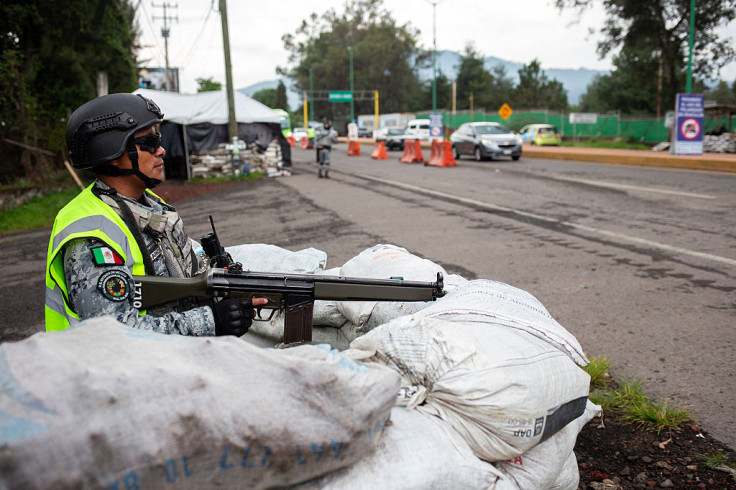
On Monday, President Claudia Sheinbaum filled in what the embassy had left blank. Speaking at her morning press conference, she said the suspension followed threats against the inspectors, and that Mexico had agreed to reinforce security in the state with National Guard personnel to protect them along with growers and packers, according to Excélsior's account of the briefing. She said she had requested direct contact with the US ambassador, that the two sides met on Friday, and that it had been established there that some people had received threats. A working group, she said, would remain permanently in place to guarantee avocado exports.
What was actually suspended
The US embassy's security alert covered all American government operations in the state, not the inspection programme specifically. The Associated Press reported that the embassy did not specify the nature of the threat to US interests, and that Michoacán Governor Alfredo Ramírez Bedolla said on social media the halt was intended to safeguard workers following recent arrests linked to extortion.
The scope of the trade disruption was set out by the USDA. A department spokesperson told CNN that any produce requiring on-site approval from its Animal and Plant Health Inspection Service in Michoacán that had not completed the process was not eligible for importation, while shipments that had already cleared would still be admitted.
The Association of Avocado Exporting Producers and Packers of Mexico, APEAM, said only fruit received on the Tuesday with a USDA official present could be processed, and that no export shipments were authorised on the Wednesday. The following day the association publicly asked Washington to work with Mexican authorities to reopen the programme as soon as possible, according to EFE.
There is a discrepancy in the public record on Mexico's response. The Associated Press reported that 300 security personnel were deployed to the Los Reyes area as a preventive measure, and that the state security secretary said his department was unaware of any direct incidents involving the avocado inspectors. Other reporting has cited a deployment of 1,500 personnel to the state. The two figures may describe different measures at different scales, and the state's position — that no incident involving inspectors was known to it — sits awkwardly beside the president's statement that threats had been received.
What is at stake
The numbers explain why a state-level security alert becomes a national economic story.
Mexico sold $3.65 billion in avocados to the United States in 2025, and exports in the first four months of this year rose 35% against the same period a year earlier, the Associated Press reported. Michoacán cultivation supports roughly 200,000 jobs in the state alone. Mexico supplies close to 80% of American avocado imports, and the US market absorbs the large majority of Mexican avocado exports by volume, with shipments running at around 1.2 million tonnes for 2026.
American consumers are unlikely to notice quickly. The Mexican Hass Avocado Association said inventory already in the supply chain should cover near-term demand. Jalisco was authorised as a second exporting state after an earlier disruption, which gives the trade a partial alternative that did not exist a few years ago.
The exposure is asymmetric, and it runs in Mexico's direction. A suspension that is an inconvenience in American supermarkets is a halt in income for Michoacán growers and packers.
The pattern
This has happened before, repeatedly, and the sequence rarely varies.
In February 2022 the US suspended avocado imports after an inspector received a threatening message; the halt lasted about a week. In June 2024, two USDA employees were assaulted and briefly held by assailants in Michoacán, prompting a suspension of avocado and mango inspections, according to the Associated Press. Then-ambassador Ken Salazar travelled to the state, Michoacán authorities agreed a security plan, and inspections resumed gradually.
The underlying condition has not changed. Michoacán has been contested for years by criminal organisations including the Jalisco New Generation Cartel and Los Viagras. Growers there have long described being pressed for protection payments under threat to themselves or their families, and there have been reports of criminal groups attempting to move avocados grown in unapproved states through the inspection system.
Which is the part that matters for anyone modelling Mexican export risk. The avocado programme is not vulnerable because of a phytosanitary dispute or a tariff schedule. It is vulnerable because a US federal inspection function is performed inside territory where the Mexican state's control is contested, and where the profitability of the crop is itself an incentive for extortion. Every resolution has restored operations without altering that arrangement.
The wider frame
The suspension lands while Mexico's trade relationship with Washington is already being renegotiated on an indefinite timetable. The United States declined on July 1 to renew the USMCA in its current form, triggering annual reviews that will now recur until the parties agree an extension or the agreement expires in 2036.
Agriculture is among the subjects on the negotiating table. A US administration seeking leverage in an annual review has, in Michoacán, a demonstrated and entirely legitimate mechanism for interrupting several billion dollars of Mexican agricultural exports at short notice, on grounds — the safety of federal employees — that Mexico cannot contest.
Nobody has suggested that is what the current suspension is for. The threat appears to be real, and Sheinbaum's account is consistent with the embassy's. But the episode is a demonstration of where the pressure points sit, and the demonstration will not be lost on either side.
Mexico is sending soldiers to protect American agricultural inspectors so that avocado exports can resume. That sentence is the trade relationship in miniature.
© Copyright 2026 IBTimes MX. All rights reserved.
- LO MÁS LEÍDO EN México